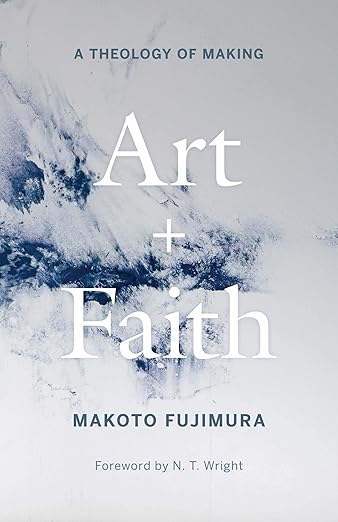
Art and Faith: A Theology of Making
Format: 📖 Book
Overall impression:
This was a great book, I especially liked that he tied what we make here that is good to resurrection and that it will persist in the new creation.
Notes…
Beauty, Mercy, and the New Creation
God does not just mend, repair, and restore; God renews and generates, transcending our expectations of even what we desire, beyond what we dare to ask or imagine. In a stunning way, Bishop Wright expands on this theologically:
What you do in the Lord is not in vain. You are not oiling the wheels of a machine that’s about to roll over a cliff. You are not restoring a great painting that’s shortly going to be thrown on the fire. You are not planting roses in a garden that’s about to be dug up for a building site. You are-strange though it may seem, almost as hard to believe as the resurrection itself-accomplishing something that will become in due course part of God’s new world.*
Preaching and teaching therefore should address the New Creation and not only offer the “fix” required after the Fall. Again, I am not saying that the “fixing” message is to be avoided, but I do think it is incomplete.
Rarely do I hear preachers address the reason why the pipes exist in the first place. I see three biblical reasons for the existence of the pipes:
- Through the pipes flows the Holy Spirit to empower us, the broken people and fallen Creation.
- Through the pipes flows the blood of Christ to restore us and rejuvenate the earth.
- Through the pipes flows the wine of New Creation to invite us into the feast of the New. But the wine of the feast will Aow backwards from the New Creation to our reality.
All art, music, and poetry, by intention or not, invokes the New. Even a non-Christian creating must have some sense of hope or it will not be possible to create into a future audience that will have a future encounter with that work of art. These three aspects of New Creation are simultaneously working together to empower, to restore, and to create into the New. What if we began to create, and live, into the New Creation to come?
Kintsugi
Jesus seeks the one lost sheep and leaves the ninety-nine behind. The ultimate act of a Kintsugi master is not to even attempt to fix the broken vessel, but to behold its potential, to admire its beauty. What kind of a church would we have, I pondered, as I rode the commuter train back to Shinjuku Station, if we sought the sixth dimension in our churches?
What kind of a church would we become if we simply allowed broken people to gather, and did not try to “fix” them but simply to love and behold them, contemplating the shapes that broken pieces can inspire?
What type of a bowl would their hands make, a visceral communication that can be passed on for ten thousand years?